Notes
Source: World Bank
Release: World Development Indicators
Units:
Frequency:
Notes:
Total fertility rate represents the number of children that would be born to a woman if she were to live to the end of her childbearing years and bear children in accordance with current age-specific fertility rates.
World Bank Source: (1) United Nations Population Division. World Population Prospects, (2) United Nations Statistical Division. Population and Vital Statistics Report (various years), (3) Census reports and other statistical publications from national statistical offices, (4) Eurostat: Demographic Statistics, (5) Secretariat of the Pacific Community: Statistics and Demography Program, and (6) U.S. Census Bureau: International Database
Source Indicator: SP.DYN.TFRT.IN
Suggested Citation:
World Bank, Fertility Rate, Total for Japan [SPDYNTFRTINJPN], retrieved from FRED, Federal Reserve Bank of St. Louis; https://fred.stlouisfed.org/series/SPDYNTFRTINJPN, .
Source: World Bank
Release: World Development Indicators
Units:
Frequency:
Notes:
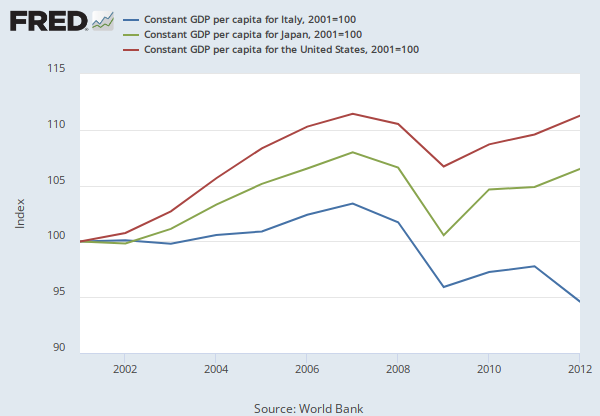
GDP per capita is gross domestic product divided by midyear population. GDP is the sum of gross value added by all resident producers in the economy plus any product taxes and minus any subsidies not included in the value of the products. It is calculated without making deductions for depreciation of fabricated assets or for depletion and degradation of natural resources.
World Bank national accounts data, and OECD National Accounts data files.
Suggested Citation:
World Bank, Constant GDP per capita for Japan [NYGDPPCAPKDJPN], retrieved from FRED, Federal Reserve Bank of St. Louis; https://fred.stlouisfed.org/series/NYGDPPCAPKDJPN, .
Related Data and Content
Data Suggestions Based On Your Search






Content Suggestions


Related Categories
Fertility Rate
Population
Population, Employment, & Labor Markets
Indicators
Japan
Countries
International Data