Federal Reserve Economic Data
Notes
Source: U.S. Bureau of Economic Analysis
Release: Personal Income and Outlays
Units:
Frequency:
Notes:
BEA Account Code: A072RC
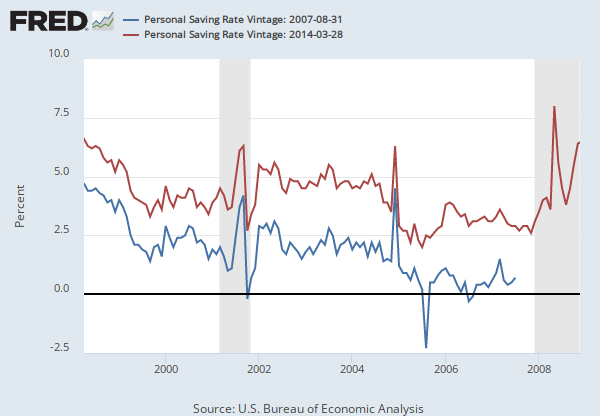
Personal saving as a percentage of disposable personal income (DPI), frequently referred to as "the personal saving rate," is calculated as the ratio of personal saving to DPI.
Personal saving is equal to personal income less personal outlays and personal taxes; it may generally be viewed as the portion of personal income that is used either to provide funds to capital markets or to invest in real assets such as residences.(https://www.bea.gov/national/pdf/all-chapters.pdf)
A Guide to the National Income and Product Accounts of the United States (NIPA).
Suggested Citation:
U.S. Bureau of Economic Analysis, Personal Saving Rate [PSAVERT], retrieved from FRED, Federal Reserve Bank of St. Louis; https://fred.stlouisfed.org/series/PSAVERT, .
Source: Federal Reserve Bank of Cleveland
Release: Inflation Expectations
Units:
Frequency:
Notes:
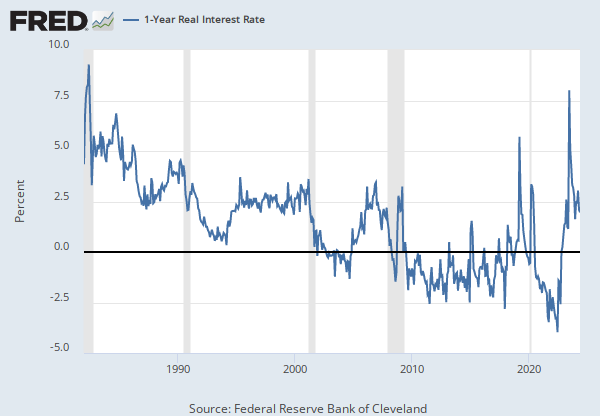
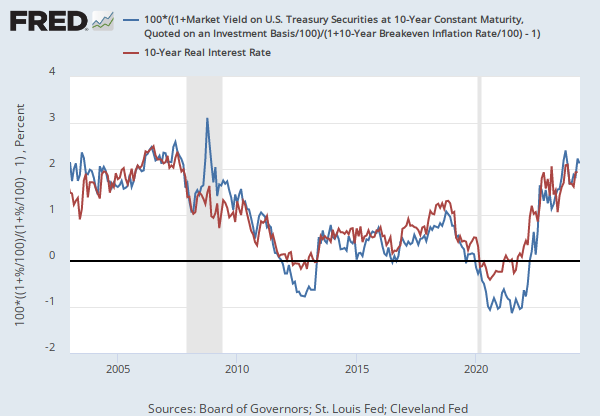
The Federal Reserve Bank of Cleveland estimates the expected rate of inflation over the next 30 years along with the inflation risk premium, the real risk premium, and the real interest rate.
Their estimates are calculated with a model that uses Treasury yields, inflation data, inflation swaps, and survey-based measures of inflation expectations.
For more information, please visit the Federal Reserve Bank of Cleveland.
Suggested Citation:
Federal Reserve Bank of Cleveland, 10-Year Real Interest Rate [REAINTRATREARAT10Y], retrieved from FRED, Federal Reserve Bank of St. Louis; https://fred.stlouisfed.org/series/REAINTRATREARAT10Y, .
Release Tables
Personal Income and Outlays
Related Data and Content
Data Suggestions Based On Your Search







Content Suggestions





Related Categories
Domestic Capital Account (Saving & Investment)
National Income & Product Accounts
National Accounts
Prices