Notes
Source: U.S. Bureau of Labor Statistics
Release: Employment Situation
Units:
Frequency:
Notes:
The series comes from the 'Current Population Survey (Household Survey)'
The source code is: LNS13000000
The Unemployment Level is the aggregate measure of people currently unemployed in the US. Someone in the labor force is defined as unemployed if they were not employed during the survey reference week, were available for work, and made at least one active effort to find a job during the 4-week survey period.
The Unemployment Level is collected in the CPS and published by the BLS. It is provided on a monthly basis, so this data is used in part by macroeconomists as an initial economic indicator of current trends. The Unemployment Level helps government agencies, financial markets, and researchers gauge the overall health of the economy.
Note that individuals that are not employed but not actively looking for a job are not counted as unemployed. For instance, declines in the Unemployment Level may either reflect movements of unemployed individuals into the labor force because they found a job, or movements of unemployed individuals out of the labor force because they stopped looking to find a job.
For more information, see:
U.S. Bureau of Labor Statistics, CES Overview
U.S. Bureau of Labor Statistics, BLS Handbook of Methods: Chapter 2. Employment, Hours, and Earnings from the Establishment Survey
Suggested Citation:
U.S. Bureau of Labor Statistics, Unemployment Level [UNEMPLOY], retrieved from FRED, Federal Reserve Bank of St. Louis; https://fred.stlouisfed.org/series/UNEMPLOY, .
Source: U.S. Bureau of Labor Statistics
Release: Employment Situation
Units:
Frequency:
Notes:
The series comes from the 'Current Population Survey (Household Survey)'
The source code is: LNS13008636
Suggested Citation:
U.S. Bureau of Labor Statistics, Number Unemployed for 27 Weeks & over [UEMP27OV], retrieved from FRED, Federal Reserve Bank of St. Louis; https://fred.stlouisfed.org/series/UEMP27OV, .
Source: U.S. Bureau of Labor Statistics
Release: Employment Situation
Units:
Frequency:
Notes:
Persons 16 years of age and older.
The series comes from the 'Current Population Survey (Household Survey)'
The source code is: LNS11000000
Suggested Citation:
U.S. Bureau of Labor Statistics, Civilian Labor Force Level [CLF16OV], retrieved from FRED, Federal Reserve Bank of St. Louis; https://fred.stlouisfed.org/series/CLF16OV, .
Source: Federal Reserve Bank of St. Louis
Release: Interest Rate Spreads
Units:
Frequency:
Notes:
Series is calculated as the spread between 10-Year Treasury Constant Maturity (BC_10YEAR) and Effective Federal Funds Rate (https://fred.stlouisfed.org/series/EFFR).
Starting with the update on June 21, 2019, the Treasury bond data used in calculating interest rate spreads is obtained directly from the U.S. Treasury Department.
Suggested Citation:
Federal Reserve Bank of St. Louis, 10-Year Treasury Constant Maturity Minus Federal Funds Rate [T10YFF], retrieved from FRED, Federal Reserve Bank of St. Louis; https://fred.stlouisfed.org/series/T10YFF, .
Release Tables
Employment Situation
Employment Situation
- Monthly, Seasonally Adjusted (population data is not adjusted for seasonal variation; not seasonally adjusted version used)
- Table A-10. Selected unemployment indicators, Seasonally adjusted: Monthly, Numbers of unemployed workers
- Table A-12. Unemployed persons by duration of unemployment: Monthly, Seasonally Adjusted
Related Data and Content
Data Suggestions Based On Your Search

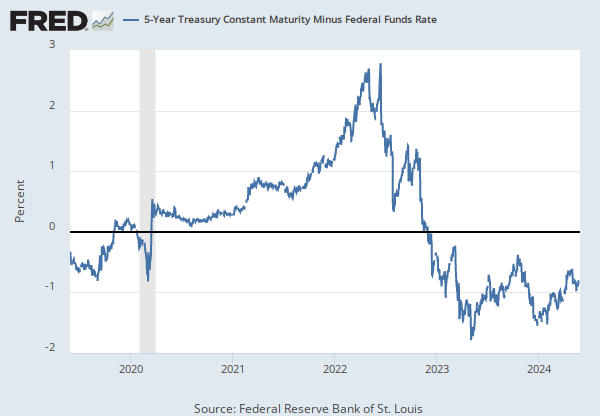


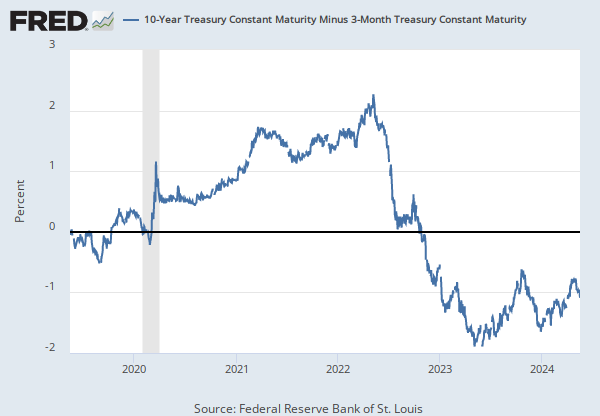
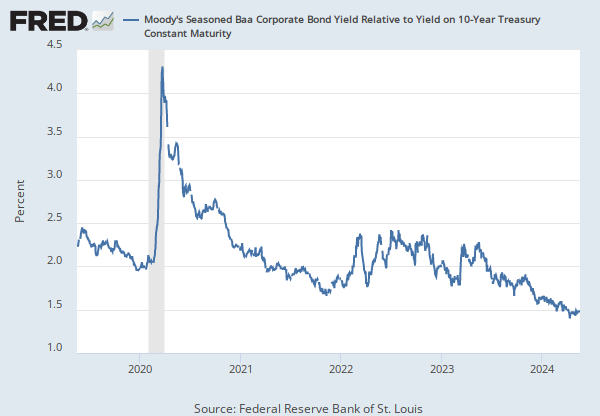


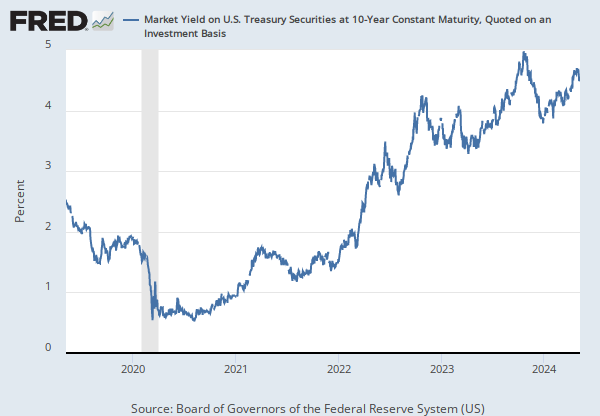


Content Suggestions






Other Formats
Unemployment Level
Monthly, Not Seasonally AdjustedNumber Unemployed for 27 Weeks & over
Monthly, Not Seasonally AdjustedCivilian Labor Force Level
Monthly, Not Seasonally Adjusted10-Year Treasury Constant Maturity Minus Federal Funds Rate
Monthly, Not Seasonally AdjustedRelated Categories
Unemployment Level
Current Population Survey (Household Survey)
Population, Employment, & Labor Markets
Civilian Labor Force
Interest Rate Spreads
Interest Rates
Money, Banking, & Finance
Releases
Tags
16 Years +
Current Population Survey (Household Survey)
Unemployment
Seasonally Adjusted
Bureau of Labor Statistics
Monthly
Nation
Public Domain: Citation Requested
United States of America
27 Weeks +
Civilian
Labor Force
Labor
Yield Curve
Spread
10-Year
Maturity
Federal
Treasury
Interest Rate
St. Louis Fed
Interest
Daily
Rate
Copyrighted: Citation Required
Not Seasonally Adjusted